
Hot wallets store private keys on internet-connected devices, which supports fast transactions but increases exposure to phishing, malware, and exchange breaches. Cold wallets keep keys offline, reducing remote attack risk but adding friction when signing transfers. In 2024, crypto-related losses reached about $2.0 billion, with compromised private keys and wallet-draining scams among the leading causes (Chainalysis). This guide compares hot and cold wallet security trade-offs, typical threat models, and practical controls for safer custody.
Key takeaways
- Hot wallets stay online, enabling fast transfers but increasing exposure to remote attacks.
- Cold wallets keep private keys offline, reducing hacking risk but slowing access.
- Use hot wallets for daily spending; store long-term holdings in cold storage.
- Two-factor authentication and strong passwords reduce hot wallet account takeover risk.
- Seed phrase security matters most; offline backups prevent loss from device failure.
- Hardware wallets improve cold storage usability, but physical theft remains a threat.
Hot Wallet Security Model: Online Exposure, Attack Surface, and Typical Threats
In 2024, Chainalysis estimated that illicit crypto addresses received about $40.9 billion, with a material share moving through internet-connected services. Hot wallets keep private keys on devices that stay online, which expands the attack surface and shortens the time defenders have to respond. Once an attacker captures a seed phrase or signing key, the loss usually becomes irreversible within minutes because most blockchain transfers settle quickly and lack chargebacks. Even when an exchange flags suspicious activity, confirmation times and network finality can outpace manual intervention.
Online exposure concentrates risk in a few common failure points. Phishing remains the dominant entry route: FBI IC3 reported $5.6 billion in cryptocurrency-related losses in 2023, much of it linked to social engineering rather than cryptographic breaks. Malware also targets browser extensions and clipboard data, while SIM-swap attacks can bypass SMS-based two-factor authentication; in 2022, the FTC reported $72 million in consumer losses from SIM swapping. Operational choices also matter: users who trade via centralized vs decentralized exchanges often keep funds in hot wallets for speed, but that convenience increases exposure to account takeover, API key theft, and compromised endpoints. Shared devices and weak recovery email security can also turn a single mistake into a full wallet drain.
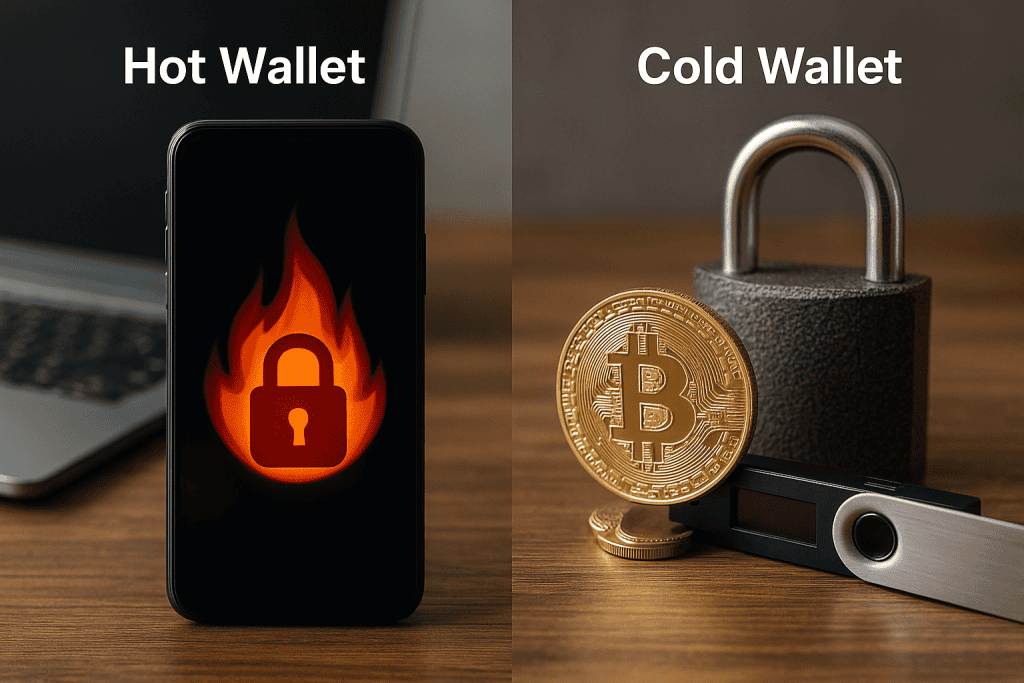
Hot Wallet vs Cold Wallet Security
Cold Wallet Security Model: Offline Key Storage, Physical Risks, and Tamper Resistance
A finance manager at a small charity keeps 12 BTC in a hardware wallet locked in a fire-rated safe, and only connects the device to sign quarterly transfers. An attacker who compromises the charity’s email and laptop still cannot extract the private key, because the key never resides on an internet-connected system and the device signs transactions internally.
This model reduces remote theft risk by moving key storage offline, but it shifts security to physical controls and operational discipline. Theft, coercion, and loss become primary threats: a burglar can steal the device, and a house fire can destroy both wallet and recovery phrase if stored together. In 2023, the FBI reported $5.6 billion in cryptocurrency-related losses, and a share involved social engineering that can also target cold-wallet holders.
Tamper resistance helps, but it does not replace process. Quality hardware wallets use secure elements and PIN attempt limits, while best practice separates the recovery phrase from the device and tests recovery at least once per year to confirm access.
Direct Comparison: Custody, Key Management, Recovery Options, and Failure Modes
Hot wallets keep signing authority in software on an internet-connected device, while cold wallets keep signing authority offline. Hot wallets prioritise speed and frequent transactions; cold wallets prioritise isolation and controlled access.
| Security dimension | Hot wallet | Cold wallet |
|---|---|---|
| Custody model | Device- or service-custodied keys; access often gated by account controls | User-custodied keys; access gated by physical possession and local verification |
| Key management | Keys stored in OS keystore or application storage; malware can target memory and files | Keys remain inside secure hardware; signing occurs internally, reducing key exposure |
| Recovery options | Account recovery may exist, but can introduce takeover risk | Seed phrase recovery is robust, but losing the phrase can be permanent |
| Failure modes | Remote compromise can drain funds quickly; response windows may be minutes | Physical theft, coercion, or backup failure can cause loss despite offline storage |
For practical use, treat hot wallets as “spending” wallets and cap balances, such as 1–5% of holdings. Reserve cold wallets for long-term storage and test recovery by restoring from the seed phrase before depositing material value.
Choosing the Right Wallet: Risk Tolerance, Transaction Frequency, and Asset Value Thresholds
Most losses occur when wallet choice does not match usage. A common failure pattern involves keeping long-term holdings in a hot wallet for convenience, then approving a malicious transaction during routine activity. In 2024, Chainalysis estimated illicit crypto addresses received about $40.9 billion, and a significant share flowed through internet-connected services. Separately, IMF analysis (2024) noted that crypto-related incidents can transmit operational risk quickly because transactions settle irreversibly once confirmed.
A practical solution uses three decision variables: risk tolerance (how much loss you can absorb), transaction frequency (how often you sign), and an asset value threshold (a hard limit for what stays online). This approach reduces exposure time for high-value keys while keeping day-to-day payments fast.
- Risk tolerance: Define a maximum acceptable loss per incident (for example, 0.5% of total holdings).
- Transaction frequency: Classify activity as daily, weekly, or monthly signing.
- Asset value threshold: Set a numeric cap for hot-wallet balances (for example, 2–4 weeks of expected spend).
Implement the policy with clear steps. Start by calculating average outflows: if you spend £250 per week, a four-week buffer equals £1,000. Next, keep only that buffer in a hot wallet and move the remainder to cold storage. Then, enforce operational controls: enable device-level screen locks, use a separate browser profile for wallet activity, and require a second person to verify the recipient address for transfers above a fixed amount (for example, £500).
For higher balances, add staged approvals. Use a hot wallet for small, frequent payments; use cold storage for savings; and route large transfers through a “warm” process: prepare the transaction on an online device, verify the address on a hardware wallet screen, then sign offline. As a measurable result, you cap worst-case online exposure to the threshold amount, while preserving transaction speed for routine activity.
Best-Practice Controls: 2FA, Multisignature, Back-ups, Seed Phrase Storage, and Operational Hygiene
In 2024, Verizon’s Data Breach Investigations Report found that 83% of breaches involved external actors, which makes strong access controls non-negotiable for any wallet that can sign transactions. Two-factor authentication (2FA) reduces account takeover risk by requiring a second proof of access, but app-based codes and hardware security keys resist SIM-swap attacks more reliably than SMS. For custodial accounts, treat 2FA as a minimum baseline rather than a primary defence.
Multisignature (multisig) raises the cost of theft by splitting signing authority across devices or people. A 2-of-3 scheme means an attacker must compromise at least 2 keys, while a 3-of-5 scheme suits teams that need redundancy without concentrating power. This control also limits single-point failure during device loss, provided signers remain independent and geographically separated.
Back-ups and seed phrase storage determine whether a mistake becomes a permanent loss. Most wallets use 12 or 24 words; store the phrase offline, keep at least 2 sealed copies, and avoid photographs, cloud drives, and email forwarding. Operational hygiene completes the control set: verify recipient addresses, confirm network and fee settings, and use a dedicated device for signing when moving high-value funds.
Frequently Asked Questions
What security risks are unique to hot wallets connected to the internet?
Hot wallets face internet-specific risks: remote hacking via malware or phishing, credential theft through keyloggers, and exploitation of browser or app vulnerabilities. Attackers can also hijack sessions, swap SIMs to intercept two-factor codes, or compromise cloud backups. These threats can trigger unauthorised transactions within minutes, with limited recovery options.
How do cold wallets reduce attack surface compared with hot wallets?
Cold wallets reduce attack surface by keeping private keys offline, removing exposure to internet-based threats such as malware, phishing, and remote exploits. Transactions require physical access and manual signing, so attackers cannot drain funds through compromised devices or browser sessions. Hot wallets keep keys on internet-connected systems, increasing entry points and credential theft risk.
Which wallet type suits frequent trading versus long-term holding of cryptoassets?
Hot wallets suit frequent trading because they stay online and support rapid transfers and exchange integrations. Cold wallets suit long-term holding because they keep private keys offline, reducing exposure to phishing and malware. Use a hot wallet for day-to-day balances and a cold wallet for reserves; many holders keep 80–95% in cold storage and 5–20% in hot storage.
What role do private keys and seed phrases play in hot wallet and cold wallet security?
Private keys authorise transactions; anyone with the private key controls the funds. A seed phrase (typically 12 or 24 words) recreates the wallet and regenerates private keys if a device is lost. Hot wallets store keys on internet-connected devices, increasing exposure to malware and phishing. Cold wallets keep keys offline, reducing remote attack risk.
How does multi-factor authentication improve hot wallet security, and what are its limits?
Multi-factor authentication (MFA) reduces hot wallet account takeovers by requiring two or more proofs, such as a password plus a time-based code or hardware key. This blocks most password-only attacks and helps against credential stuffing. MFA cannot stop malware on a logged-in device, SIM-swap interception of SMS codes, or theft of recovery codes.
What are the most common ways users lose funds with cold wallets, such as phishing or physical loss?
Users most often lose cold-wallet funds through seed phrase exposure (phishing sites, fake support, or QR scams), insecure backups (photos, cloud notes, or email), and supply-chain tampering (pre-set seed cards or modified devices). Physical risks include device theft, fire or water damage, and lost recovery phrases. PIN failures and passphrase loss can permanently lock access.
How should an individual choose between a hardware wallet, paper wallet, and software hot wallet for secure storage?
Choose based on threat model, budget, and access needs. A hardware wallet suits long-term holdings: keys stay offline and devices cost about £50–£200. A paper wallet avoids electronics but risks loss, fire, and printing errors; use only with secure generation and storage. A software hot wallet fits small, frequent spending; keep under 5–10% of holdings and enable 2FA.