
UK crypto risks: price volatility, fraud, and cyber security threats
Cryptoassets carry distinct risks for UK users, even when a platform follows local rules. Price volatility remains the most visible issue. Many tokens can move by double digits in a single day, driven by thin liquidity, market sentiment, and news events. A portfolio that holds only a small number of coins can amplify these swings, so readers often compare market size, trading history, and use case before buying. For context on widely traded options, see Top Crypto Assets.
Fraud presents a separate and persistent threat. Common scams include impersonation of exchanges, fake “investment managers”, and cloned websites that mimic legitimate services. Criminals also use social engineering, which means manipulating a person into sharing a one-time passcode, recovery phrase, or remote access to a device. UK users should treat any request for a seed phrase as a clear warning sign, since a seed phrase grants full control of a wallet. The Financial Conduct Authority (FCA) also warns about unauthorised firms and misleading promotions, which can appear through search adverts and social media posts.
Cyber security threats affect both exchanges and individuals. Attackers target email accounts, mobile numbers, and devices to intercept authentication codes or reset passwords. SIM swap fraud, where a criminal takes control of a phone number, can defeat SMS-based security. Phishing remains common, yet malware and “clipboard hijacking” also cause losses by changing a copied wallet address before a transfer. Strong account hygiene reduces exposure: unique passwords, an authenticator app rather than SMS where possible, and careful checks of URLs and wallet addresses before sending funds. Even with these steps, users should assume that mistakes can be irreversible, since many blockchain transfers cannot be cancelled.
Is crypto safe?
Regulation and consumer protection in the UK: FCA rules, FSCS limits, and tax duties
UK crypto regulation aims to reduce harm, not to remove risk. The Financial Conduct Authority (FCA) supervises cryptoasset businesses mainly for anti-money laundering controls, which include customer checks and reporting duties. That supervision does not mean the FCA approves a token, guarantees returns, or protects a customer from losses. Separate FCA rules restrict how firms market crypto to UK consumers, with requirements on clear risk warnings and limits on inappropriate incentives.
Consumer protection also has clear limits. The Financial Services Compensation Scheme (FSCS) does not cover cryptoassets. If a crypto exchange fails, a customer usually cannot claim FSCS compensation for coins held on the platform. Protection may apply only to regulated products that sit alongside crypto, such as money held in a UK bank account in the customer’s name, subject to the bank meeting FSCS conditions. For that reason, users often check whether a firm appears on the FCA register and whether the service involves custody of crypto or only provides access to trading.
Tax duties also matter. HM Revenue & Customs (HMRC) treats cryptoassets as taxable in many common situations. Selling crypto for pounds, swapping one token for another, spending crypto, or gifting crypto can trigger Capital Gains Tax, depending on allowances and the individual’s wider tax position. Income Tax may apply to certain receipts, such as mining or staking rewards, when the activity counts as income. Accurate records support compliance, including dates, values in sterling, transaction fees, and wallet or exchange references.
Regulation, compensation rules, and tax treatment each shape the real-world safety of crypto in the UK. A clear view of those boundaries helps users set expectations before committing funds.
How to assess crypto platforms: exchange security, custody models, and proof of reserves
Security varies widely between crypto platforms, so a structured check helps reduce avoidable risk. Start with exchange security controls. A reputable operator publishes clear details on account protection, including two-factor authentication (2FA), withdrawal allow-lists, device management, and phishing protections. Incident history also matters. A transparent firm explains past breaches, remediation steps, and any user reimbursement policy.
Next, assess the custody model, which describes who controls the private keys (the codes that authorise transfers). With custodial platforms, the provider holds the keys and you hold a claim on the assets. That setup can improve convenience, yet it introduces counterparty risk if the firm fails or freezes withdrawals. Non-custodial wallets place key control with the user, which reduces reliance on a third party but increases personal responsibility for backups and recovery phrases.
- Custodial exchange: easier access and support, but you rely on the platform’s controls and solvency.
- Non-custodial wallet: you control keys, but loss of recovery phrase can mean permanent loss.
Proof of reserves can add another layer of confidence. This evidence aims to show that a platform holds on-chain assets that match customer balances. Look for regular, independently verified attestations and a clear method, such as Merkle tree reporting (a cryptographic way to let users verify inclusion without revealing other accounts). Treat proof of reserves as one signal, not a guarantee, because it may not show liabilities, off-chain borrowing, or operational risks.
For baseline expectations, compare a platform’s disclosures with guidance from the Financial Conduct Authority (FCA) on cryptoasset risks. A cautious approach prioritises transparent custody terms, robust account security, and verifiable reserve reporting.
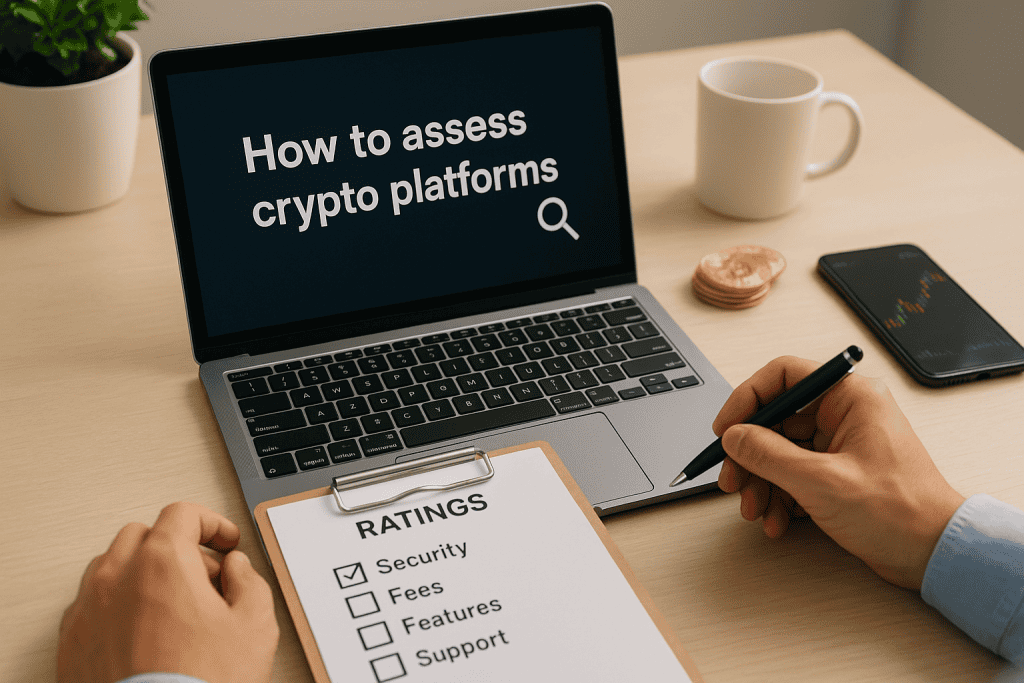
How to assess crypto platforms
Practical safety steps for UK users: wallets, authentication, and scam-avoidance checks
Practical safety starts with controlling access to funds and limiting the impact of mistakes. Begin with storage. A hardware wallet keeps private keys (the codes that authorise transfers) offline, which reduces exposure to malware and exchange breaches. If a hardware wallet does not suit the use case, use a reputable software wallet and secure the recovery phrase offline. Never store a seed phrase in email, cloud notes, or screenshots.
- Separate holdings: Keep long-term holdings in a wallet you rarely connect, while using an exchange account only for trading.
- Verify addresses: Copy-paste can still fail if malware swaps addresses. Check the first and last characters before sending.
- Test transfers: Send a small amount before moving a larger balance, especially on a new network.
Next, harden authentication. Use two-factor authentication (2FA) with an authenticator app rather than SMS, since criminals can hijack mobile numbers through SIM-swap fraud. Set a unique, long password and store it in a password manager. Turn on withdrawal allow-lists where available, then lock changes behind a cooling-off period. Email security matters as much as exchange security, so protect the email account with 2FA and a separate password.
Scam checks reduce the most common causes of loss. Treat unsolicited messages, “guaranteed returns”, and urgency as warning signs. Confirm URLs by typing them manually, and ignore paid adverts that mimic legitimate brands. Before acting on market emotion, sense-check sentiment using tools such as Fear and Greed, then pause and re-check the plan. If a request involves remote access software, “verification” payments, or moving funds to a “safe wallet”, stop immediately.
Any step that pressures speed, secrecy, or bypassing normal security controls signals elevated risk.
FAQ
Is crypto safe for UK users?
Cryptoassets can be used safely, but no option removes risk. Market moves can stay extreme, and criminals often target new users. Safety depends on how a person stores assets, how a person secures accounts, and which services a person uses. Treat crypto as high risk, and only commit money a person can afford to lose.
Does FCA registration mean a platform is safe?
No. Registration with the Financial Conduct Authority (FCA) mainly relates to anti-money laundering controls. It does not mean the FCA approves a token, guarantees returns, or insures losses. A platform can meet registration duties and still suffer outages, hacks, or operational failures. Use FCA information as one input, not as a safety stamp.
Are crypto holdings protected by the FSCS?
In most cases, no. The Financial Services Compensation Scheme (FSCS) typically protects eligible deposits and certain regulated investments, not cryptoassets. Some firms offer e-money accounts or bank accounts alongside crypto services, and those balances may have different protections. Check the exact product type and the legal entity that holds client money before relying on any protection claim.
What is the safest way to store crypto?
Many users reduce exposure by holding long-term assets in self-custody, where the user controls the private keys. A hardware wallet keeps keys offline, which can limit damage from malware and exchange breaches. Self-custody also creates responsibility. If a person loses the recovery phrase, no bank or provider can restore access. For active trading, some users keep a smaller balance on an exchange and move the rest to a wallet.
How can a UK user spot common scams?
Fraud often starts with urgency and secrecy. Be cautious with “guaranteed returns”, unsolicited messages, and requests to move funds to a new address “for verification”. Impersonation also remains common, including fake support accounts and cloned websites. Use official channels, type website addresses manually, and confirm withdrawals with a second check. When in doubt, pause and verify with the provider’s official help pages.
Where can a person check official guidance?
For risk warnings and regulatory updates, use the FCA cryptoassets guidance. For UK tax treatment, consult HM Revenue & Customs (HMRC) and keep clear records of trades, transfers, and fees.