
- Dollar-cost averaging spreads crypto buys over time to reduce timing risk.
- DCA can lower the impact of volatility, but it does not remove market risk.
- Regular fixed purchases suit long-term investors who struggle with emotional trading.
- DCA may underperform lump-sum investing during strong, sustained bull markets.
- Fees and spreads can erode returns, so low-cost platforms matter for DCA.
- Clear rules on amount, frequency, and assets help keep a DCA plan consistent.
What Dollar-Cost Averaging Means in Cryptocurrency Markets
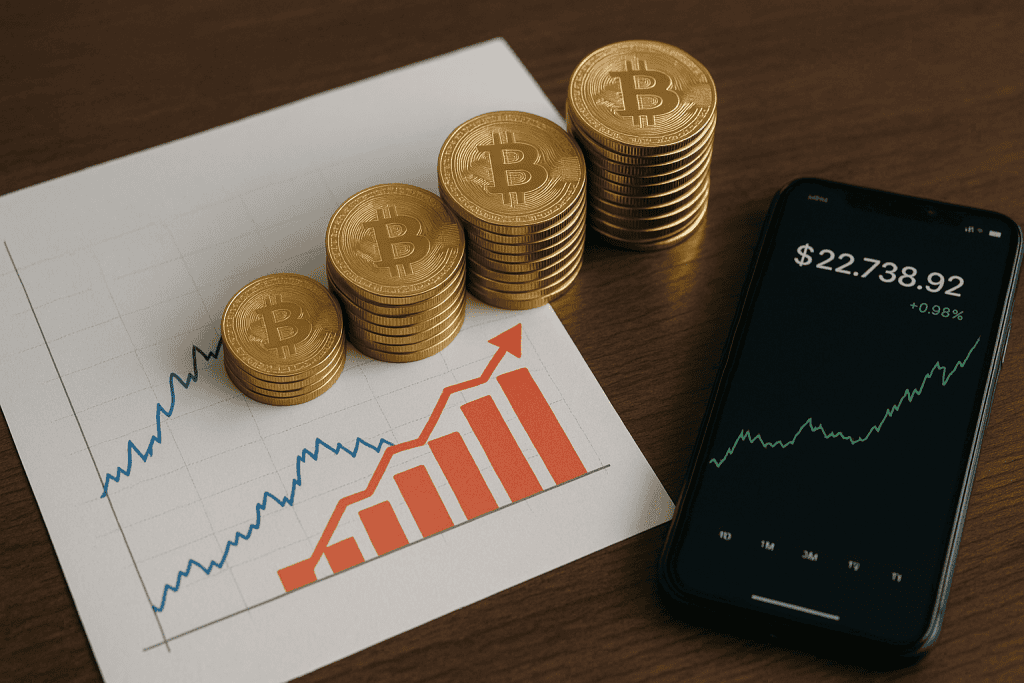
Dollar-cost averaging (DCA) describes a method of investing where a person buys a fixed amount of an asset at regular intervals, rather than investing a lump sum at one time. In cryptocurrency markets, DCA usually means purchasing a set value of a coin or token weekly or monthly, regardless of short-term price moves. This approach aims to reduce the impact of volatility, which refers to how sharply prices rise and fall over short periods. Crypto prices can swing quickly because trading runs continuously, market liquidity varies by asset, and sentiment can change within hours. DCA responds to that uncertainty by spreading entry points across time. When prices fall, the same cash amount buys more units; when prices rise, the same cash amount buys fewer units. Over a series of purchases, this pattern can produce an average entry price that sits between the highs and lows seen during the period. DCA does not guarantee profit, and it does not remove risk. A sustained decline in an asset can still lead to losses, even with disciplined buying. The method also suits investors who prefer a rules-based routine, since regular purchases can limit emotional decisions such as chasing sudden rallies or panic selling after sharp drops. Many exchanges support recurring buys, which can make DCA easier to follow. For example, Coinbase and Kraken offer tools that help schedule repeat purchases. Even so, fees and spreads can affect results, so consistent costs matter. DCA works best when the chosen schedule, budget, and asset selection match the investor’s time horizon and tolerance for drawdowns, which are declines from a recent peak.
Dollar-Cost Averaging
How DCA Works Step by Step for Bitcoin and Altcoins
Dollar-cost averaging works through a simple routine: choose an asset, set a fixed cash amount, pick a schedule, then repeat the same purchase regardless of short-term price swings. For Bitcoin, many investors use DCA to build exposure while avoiding the pressure of timing a single entry point. Altcoins follow the same logic, although liquidity, spreads (the gap between buy and sell prices), and project risk can vary more widely. Most people run DCA through an exchange or broker that supports recurring buys. For example, Coinbase and Kraken offer scheduled purchases in several regions. A wallet provider such as Trezor can then store the assets if you prefer self-custody, which means you control the private keys rather than leaving coins on an exchange.
- Select the asset: decide whether you will buy Bitcoin only, a mix of large-cap coins, or a small basket of altcoins.
- Set a fixed amount: choose a sum you can sustain, such as £25 or £100 per interval.
- Choose a frequency: weekly suits many budgets; monthly reduces transaction fees but reacts more slowly to price changes.
- Automate the purchase: enable recurring buys and ensure funding remains available.
- Track cost basis: record each buy price to understand your average entry and to support tax reporting.
- Review rules, not emotions: adjust only when your budget, risk tolerance, or asset thesis changes.
For altcoins, apply extra discipline. A fixed schedule can limit impulsive buying, yet it cannot remove the risk of a token failing. Consider setting eligibility rules, such as minimum liquidity, a clear use case, and a defined maximum allocation per coin.
When DCA Tends to Perform Well: Volatility, Time Horizon, and Discipline
DCA tends to perform well when prices move sharply in both directions, because regular purchases spread entry points across many market conditions. In crypto, volatility often creates short-term drawdowns that can unsettle investors who buy in one transaction. A fixed schedule can reduce the temptation to react to headlines or sudden price spikes, while still building exposure over time. Time horizon matters. DCA aligns best with medium to long holding periods, where the investor expects adoption, network activity, or broader market cycles to play out. Short horizons can leave little time for the averaging effect to work, particularly if a large decline occurs near the end of the period. For that reason, many people pair DCA with a clear plan for how long purchases will continue and when, if ever, they will stop. Discipline often decides results. DCA works as intended only when contributions remain consistent through both rallies and sell-offs. Automating recurring buys on a reputable exchange, such as Coinbase or Kraken, can support consistency, although fees and spreads still affect outcomes. A realistic budget also helps, since missed contributions can concentrate purchases at less favourable prices.
Where DCA Can Fall Short: Prolonged Downtrends, Opportunity Cost, and Fees
DCA can struggle during prolonged downtrends. Regular buys lower the average entry price, yet the portfolio value may keep falling for months, which can test risk tolerance and cash-flow limits. A long bear market can also create opportunity cost, since capital tied up in a declining asset cannot move into stronger areas, such as cash, bonds, or other investments. Fees and spreads can erode results as well, especially with small, frequent orders. Trading charges vary by venue, so check the published fee schedule on an exchange such as Coinbase or Binance. Network fees can add friction when you withdraw to a wallet, and wide spreads in thinly traded altcoins can act as a hidden cost. DCA reduces timing risk, but it does not remove market risk, and it may suit investors with a long horizon and stable income.
DCA Versus Lump-Sum Investing in Crypto: Key Trade-offs and Evidence
DCA and lump-sum investing solve different problems. Lump-sum investing puts all capital to work immediately, which can suit investors who expect long-term growth and can tolerate sharp drawdowns. DCA spreads purchases over time, which can reduce regret from buying just before a drop, yet it also delays full market exposure. Evidence from traditional markets often favours lump-sum investing when prices rise over time, because earlier exposure captures more upside. Vanguard has published research showing that lump-sum investing has tended to outperform DCA in rising markets, while DCA can reduce the risk of poor timing when prices fall soon after investing. Crypto markets share the same arithmetic, although higher volatility can make the emotional benefit of DCA more valuable for some investors. In practice, the trade-off often comes down to risk management and behaviour. A lump sum may deliver higher expected returns, yet it demands strong conviction and the ability to hold through large swings. DCA may produce lower returns in fast bull runs, but it can support consistency, especially when an investor funds purchases from regular income. A blended approach can also fit: invest part now, then schedule the remainder over a defined period.
DCA schedule and investment
Choosing a DCA Schedule and Amount: Weekly, Monthly, and Rule-Based Approaches
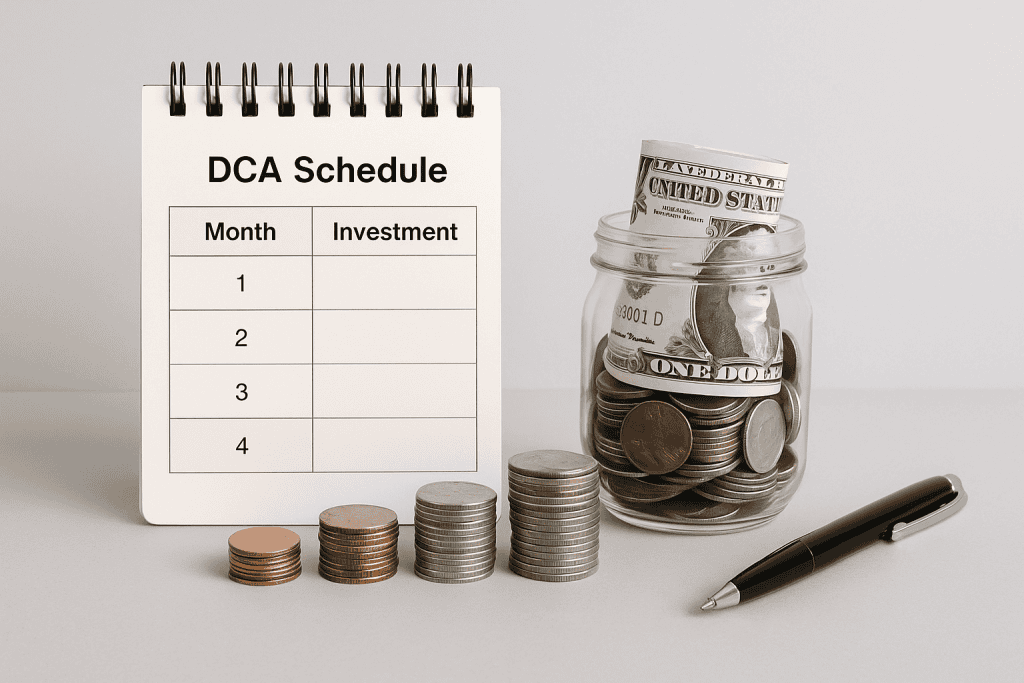
A DCA schedule should match cash flow, fee structure, and the level of attention you can sustain. Weekly buying suits highly volatile assets because it spreads entry points across more price moves. Monthly buying reduces administrative effort and can lower total transaction fees, yet it may concentrate purchases around fewer market conditions. Many investors prefer a fixed cash amount per interval, since that keeps risk budgeting clear. A percentage-of-income approach can also work, provided the contribution stays consistent across market cycles.
- Weekly: more frequent averaging; consider this when exchange fees are low and you can automate purchases.
- Monthly: simpler to manage; often better when fees, spreads, or on-chain costs make small trades inefficient.
- Rule-based: adjusts contributions using pre-set triggers, such as investing extra after a defined drawdown or pausing buys if fees spike.
Rule-based DCA needs strict rules to avoid emotional decisions. For example, a plan might add 25 per cent to the usual buy when price falls 10 per cent from the prior month’s average, while keeping a maximum monthly spend. Before committing, check the fee schedule and minimum order sizes on your chosen platform, such as Coinbase or Binance, since costs can change the best cadence.
Risk Management for DCA: Position Sizing, Diversification, and Exit Plans
Risk management turns DCA from a habit into a plan. Start with position sizing: decide the maximum share of your investable portfolio that crypto can hold, then split that cap across each DCA purchase. A clear ceiling limits the damage from deep drawdowns and prevents “averaging down” from becoming uncontrolled exposure. Many investors also keep a cash buffer so scheduled buys do not force sales of other assets during market stress. Diversification can reduce single-asset risk, yet it needs discipline. Bitcoin and Ethereum often act as core holdings, while smaller allocations to higher-risk altcoins can limit the impact of a project failure. Correlation matters; assets that move together may not provide real diversification. Consider stablecoins as a parking place for unallocated capital, while recognising issuer and regulatory risks. For background on cryptoasset risks, consult the Financial Conduct Authority (FCA). Exit plans should be written before you start. Define profit-taking rules, rebalancing thresholds, and a maximum loss level that triggers a pause or a reduction in DCA. A time-based review, such as quarterly, helps you adjust to changes in fees, liquidity, or personal circumstances without reacting to headlines.
Practical Checklist to Assess Whether DCA Fits Your Crypto Strategy
Confirm that the goal suits DCA: building long-term exposure, not trading short-term moves. Set a maximum crypto allocation for your wider portfolio, then check that each scheduled purchase fits your budget after essentials and higher-interest debt. Choose the assets you can hold through deep drawdowns; for Bitcoin and Ethereum, review market data and risk notes from Coinbase Learn and investor warnings from the Financial Conduct Authority (FCA). Next, calculate total costs. Compare exchange fees, spreads, and withdrawal charges, since small, frequent buys can raise friction. Decide how you will store holdings, then write down basic security steps, such as hardware wallet use and two-factor authentication. Define review points, such as quarterly rebalancing, and set clear exit rules for profit-taking, loss limits, or a time-based end date. If you cannot follow the schedule during stress, DCA may not fit your strategy.
Frequently Asked Questions
What does dollar-cost averaging (DCA) mean in cryptocurrency investing?
Dollar-cost averaging (DCA) in cryptocurrency investing means buying a fixed amount of a crypto asset at regular intervals, regardless of price. This approach spreads purchases over time, which can reduce the impact of short-term volatility and limit the risk of investing a lump sum at an unfavourable price.
How does DCA compare with lump-sum investing when crypto prices are volatile?
DCA spreads purchases over time, which reduces the impact of short-term price swings and lowers the risk of buying at a peak. Lump-sum investing commits all funds at once, so results depend heavily on timing. During high volatility, DCA often produces steadier entry prices, while lump-sum can outperform if prices rise soon after purchase.
Which factors determine whether DCA works well for a specific cryptocurrency?
DCA works best when the cryptocurrency has long-term adoption potential, sufficient liquidity, and manageable volatility. Key factors include price trend over the investment horizon, drawdown risk, market depth, trading fees, and spread. Token supply rules, inflation, and unlock schedules also matter, as do security, regulation risk, and exchange access.
What risks and limitations should investors consider before using a DCA strategy in crypto?
DCA can reduce timing risk, yet crypto remains highly volatile. Prices may keep falling, so losses can build. Fees, spreads, and slippage can erode returns. Illiquid tokens may limit execution. A fixed schedule can ignore changing fundamentals. DCA does not protect against scams, exchange failures, or regulatory shocks. Investors still need diversification and risk limits.
How can investors choose a DCA schedule and investment amount for crypto purchases?
Investors can match a DCA schedule to income frequency and risk tolerance, such as weekly or monthly buys. A fixed amount that fits the budget helps consistency. Many choose a sum that would not affect essential spending if prices fall. Reviewing the plan quarterly can keep contributions aligned with goals and market volatility.