
- Stablecoins rely on reserve quality and transparency, not deposit insurance protections.
- Bank deposits often benefit from regulated capital rules and government-backed safety nets.
- Redemption risk rises when issuers hold illiquid assets or face sudden withdrawal surges.
- Stablecoin depegs can occur through market stress, governance failures, or reserve doubts.
- Custody and wallet security shift responsibility to users, unlike most bank accounts.
- Regulation varies widely across jurisdictions, creating uneven consumer protections for stablecoins.
How Stablecoins Work: Pegs, Reserves, and Issuers
Stablecoins aim to keep a steady price by linking, or pegging, their value to an external reference such as the US dollar or a short-term government bond index. Most widely used stablecoins maintain a one-to-one peg, so one token should trade close to one unit of the reference currency. Markets can still push the price slightly above or below the peg, especially during periods of stress. Reserves support the peg. In a fiat-backed model, an issuer holds assets such as cash and short-dated government securities, then issues tokens against those holdings. When users redeem tokens, the issuer burns the tokens and returns the reference currency, which helps keep supply aligned with demand. Some projects publish reserve reports and attestations; however, the quality, frequency, and scope of disclosures vary. Issuers sit at the centre of many stablecoin designs. For example, Tether and Circle (USDC) manage issuance and redemption, set eligibility rules, and work with banking partners. Regulation also shapes operations. In the United Kingdom, the Financial Conduct Authority sets expectations for firms that carry out regulated cryptoasset activities, which can affect how stablecoin services reach users.
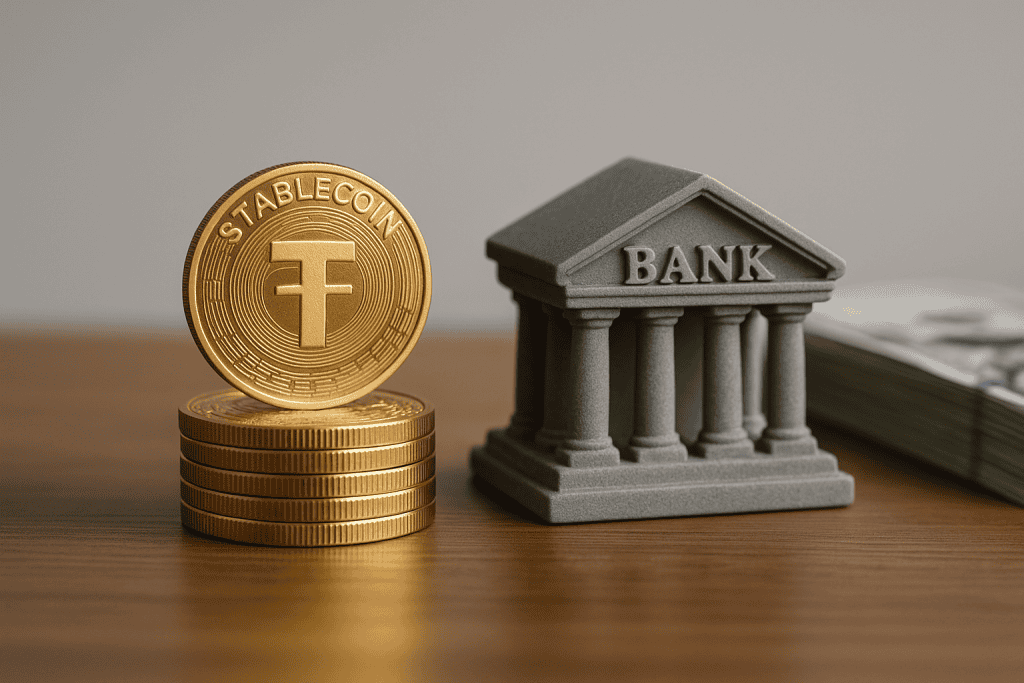
Stablecoins Safer Than Banks
How Banks Manage Money: Deposits, Lending, and Capital Buffers
Banks accept customer deposits and use much of that money to fund lending. This model, known as fractional reserve banking, means a bank keeps only a portion of deposits in cash or central bank reserves, while the rest supports mortgages, business loans, and other credit. As a result, banks transform short-term liabilities (deposits that customers can withdraw) into longer-term assets (loans that repay over time). To manage day-to-day withdrawals, banks hold liquid assets and access central bank facilities. In the United Kingdom, the Bank of England sets prudential expectations and can provide liquidity to solvent banks under stress. Payment flows also matter: banks settle with each other through central bank money, which reduces settlement risk compared with private IOUs. Capital buffers sit at the centre of bank safety. Capital represents shareholders’ funds that absorb losses before depositors take a hit. Regulators require minimum capital levels and risk controls under global standards set by the Basel Committee on Banking Supervision. Banks must also manage liquidity risk, since a sudden rush of withdrawals can force asset sales at depressed prices.
- Deposits: typically repayable on demand, which creates confidence but also “run” risk.
- Lending: generates income, yet exposes the bank to credit losses if borrowers default.
- Capital: absorbs losses and supports resilience during downturns.
- Liquidity buffers: holdings of cash and high-quality liquid assets to meet withdrawals.
Deposit protection adds another layer. In the UK, the Financial Services Compensation Scheme (FSCS) protects eligible deposits up to £85,000 per person, per authorised firm. This backstop reduces panic withdrawals, while supervision and stress testing aim to spot weaknesses before they threaten depositors.
Core Safety Risks in Stablecoins: Depegging, Reserve Quality, and Redemption Limits
Stablecoins face three core safety risks that differ from bank deposit risk: depegging, reserve quality, and redemption limits. Depegging occurs when market confidence weakens and the token trades below its reference value. Stress can spread quickly because trading venues price stablecoins continuously, and arbitrage may fail when liquidity dries up or fees rise. Reserve quality matters because reserves determine whether an issuer can meet redemptions at par. Some issuers hold cash and short-dated government securities, while others rely on riskier assets or complex structures. Clear, frequent disclosures and independent attestations reduce uncertainty, yet they do not guarantee that reserves remain liquid under pressure. Guidance from the Financial Stability Board highlights how stablecoin arrangements can transmit shocks when reserve assets lose value or become hard to sell. Redemption limits create a further vulnerability. Many stablecoins only offer direct redemption to verified customers, often with minimum sizes, fees, or settlement delays. During market stress, those frictions can widen the gap between the token price and the reference value. Regulation can mitigate these risks, but protections vary by jurisdiction and product design, so safety depends on the specific stablecoin, its reserves, and its redemption terms.
Core Safety Risks in Banks: Credit Losses, Liquidity Stress, and Bank Runs
Banks face three core safety risks: credit losses, liquidity stress, and bank runs. Credit risk arises when borrowers miss repayments and loan values fall. Losses erode capital buffers and reduce a bank’s ability to absorb shocks. Supervisors set capital and liquidity rules, yet weak underwriting or a sharp downturn can still strain balance sheets. Liquidity stress occurs when a bank cannot raise cash fast enough to meet withdrawals or other short-term obligations. Long-dated loans or securities take time to sell, and forced sales can lock in losses. Central banks can provide emergency liquidity, but access depends on eligible collateral and policy conditions. Bank runs happen when many depositors seek funds at the same time. Even a solvent bank can fail if confidence collapses. Deposit guarantee schemes reduce panic, although coverage limits and payout speed matter. For the United Kingdom, see the Financial Services Compensation Scheme (FSCS).
- Credit losses: loans default or fall in value.
- Liquidity stress: cash needs exceed readily available funds.
- Bank runs: withdrawals accelerate due to loss of confidence.
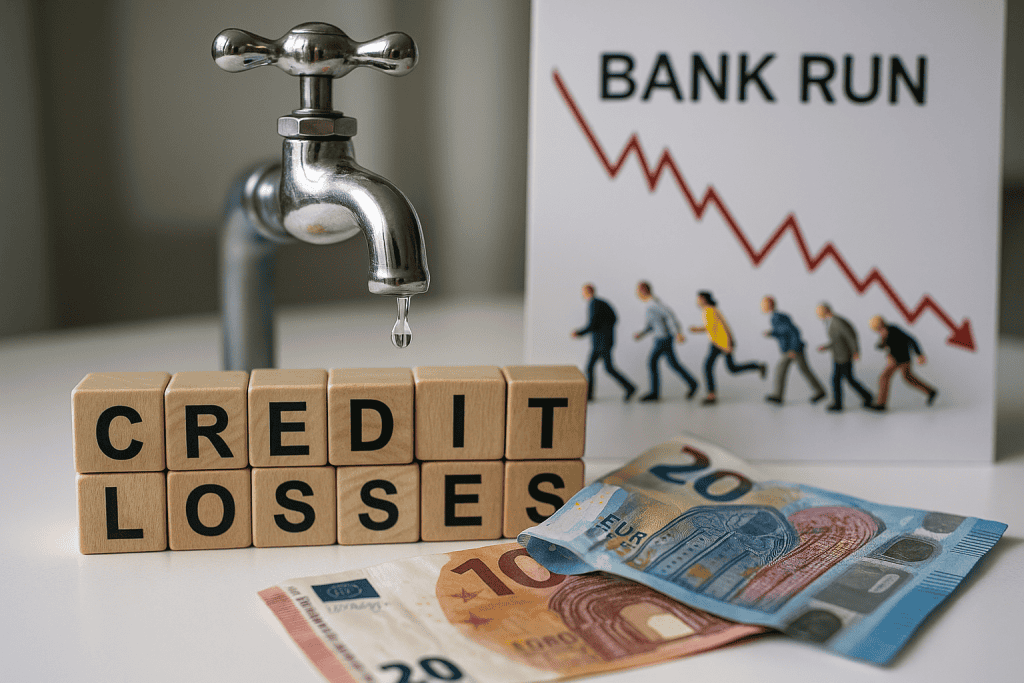
Credit Losses, Liquidity Stress, and Bank Runs
Regulation and Consumer Protection: Stablecoin Rules Versus Deposit Insurance
Regulation shapes how each product protects consumers when confidence falls. Banks operate under prudential supervision, which sets minimum capital and liquidity requirements and tests resilience under stress. In the United Kingdom, eligible deposits also benefit from statutory protection through the Financial Services Compensation Scheme (FSCS), which can reimburse customers up to the scheme limit if a bank fails. That backstop reduces loss risk for covered deposits, although access can still take time and limits apply. Stablecoins sit in a different framework. Some issuers hold high-quality reserves and publish attestations, yet disclosure standards vary and do not always match bank-style reporting. Consumer rights also depend on the legal structure: a token may represent a claim on an issuer, a trust arrangement, or a contractual promise, each with different protections in insolvency. Even where rules tighten, stablecoin holders usually do not receive deposit insurance, and redemption can depend on the issuer’s terms, operational capacity, and the stability of payment rails. As a result, regulation can narrow risks, but it does not make stablecoins equivalent to insured bank deposits. Safety often turns on jurisdiction, reserve governance, and enforceable redemption rights.
Practical Safety Checks: What to Review Before Holding Stablecoins or Bank Deposits
Before holding stablecoins, confirm who issues the token and where redemptions occur. Read the issuer’s reserve attestations and check the frequency, scope, and named auditor. Prefer reserves held in cash and short-dated government securities rather than unsecured lending or opaque instruments. Review the legal claim: some structures grant a direct redemption right, while others rely on intermediaries. Check how quickly redemptions settle, what fees apply, and whether the issuer can pause withdrawals. If the stablecoin sits on an exchange, assess the platform’s custody terms and segregation of client assets, since exchange failure can block access even when the token remains near its peg. For bank deposits, verify that the institution is authorised and identify which entity holds the account, particularly when using app-based brands. Confirm eligibility for protection under the Financial Services Compensation Scheme (FSCS) and keep balances within the applicable limit per authorised bank. Review account access during stress: faster payments, card spending, and cash withdrawals can face temporary limits. Where large sums are involved, spread funds across separate authorised banks and keep clear records of account ownership to support any claim.
Frequently Asked Questions
How do stablecoins maintain their peg to a fiat currency such as the pound sterling or US dollar?
Stablecoins keep a peg by matching each token to assets worth the same amount in the target currency. Issuers may hold cash and short-term government debt, or use algorithms and collateral to manage supply and demand. Arbitrage trading also helps: when the price drifts, traders buy or sell until it returns to the peg.
What protections apply to bank deposits in the United Kingdom, and how do those protections compare with stablecoin holdings?
In the United Kingdom, the Financial Services Compensation Scheme (FSCS) protects eligible bank deposits up to £85,000 per person, per authorised firm, if the bank fails. Stablecoin holdings usually lack FSCS cover. Protection depends on the issuer’s safeguards, custody arrangements, and any regulatory regime, so losses can fall on the holder.
Which risks affect stablecoins most, including issuer insolvency, reserve quality, and depegging events?
Stablecoins face three main risks: issuer insolvency, weak reserve quality, and depegging. Insolvency can freeze redemptions and trigger losses. Poor reserves, such as illiquid or risky assets, can fail under stress. Depegging can follow heavy withdrawals, market shocks, or broken arbitrage, causing the price to drift below the target value.
How does stablecoin regulation in the United Kingdom differ from banking regulation, and what does that mean for consumers?
UK banks face strict prudential rules, deposit protection under the Financial Services Compensation Scheme, and close supervision by the Prudential Regulation Authority and Financial Conduct Authority. Stablecoins sit under a developing regime, with rules focused on issuance, custody, and payments, but without equivalent deposit insurance. Consumers may face higher loss risk if an issuer fails.
In what situations might stablecoins offer practical advantages over banks for payments or transfers, and what trade-offs should users expect?
Stablecoins can suit cross-border transfers, out-of-hours payments, and small online transactions where speed and predictable value matter. Users should expect trade-offs such as issuer and reserve risk, platform or wallet hacks, network fees and congestion, limited chargeback rights, and changing rules on access, reporting, or redemption.