
- 2026 may accelerate tokenised real-world assets as regulation and infrastructure mature.
- Institutional adoption could rise as custody, compliance, and reporting tools become standardised.
- Tokenisation can improve liquidity by enabling fractional ownership and faster secondary trading.
- Private credit, treasuries, and real estate often lead due to clear cash flows.
- Interoperable blockchains and better identity checks may reduce settlement and counterparty risk.
- Key constraints remain: asset verification, legal enforceability, and reliable on-chain pricing.
What Tokenised Real-World Assets Are and How Tokenisation Works
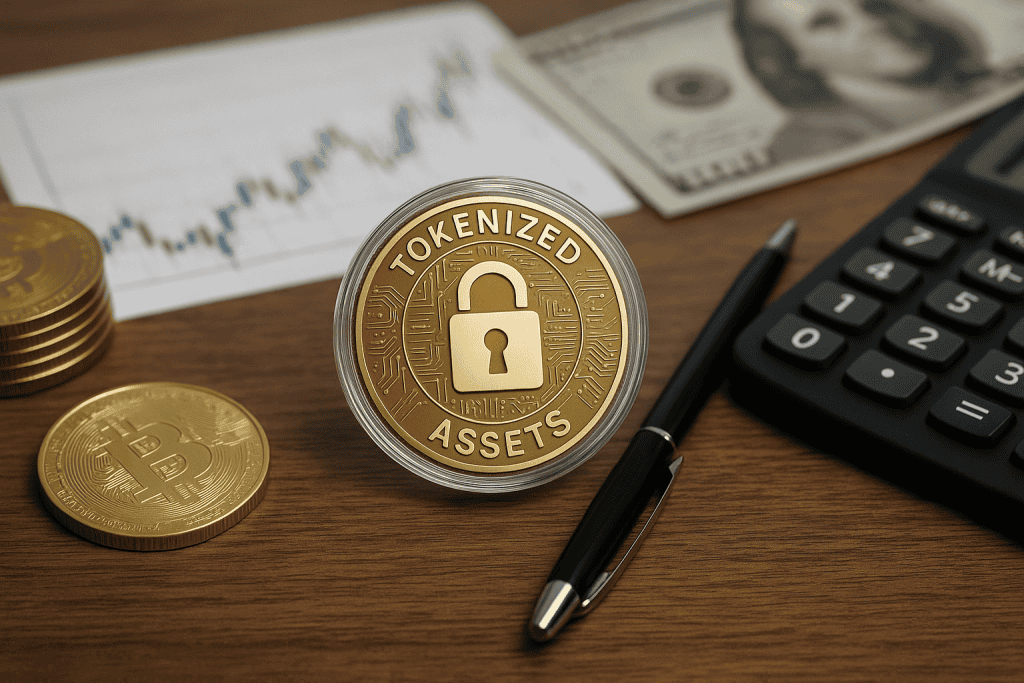
Tokenised real-world assets (RWAs) are digital tokens that represent ownership of, or rights to, a physical or traditional financial asset. Common examples include property, private credit, commodities, invoices, and shares in funds. Each token sits on a blockchain, which is a shared database that records transactions in a way that makes later changes difficult. Tokenisation does not change the underlying asset. Instead, tokenisation changes how people issue, hold, and transfer claims to that asset.
What makes an asset “tokenised”
A token becomes meaningful when it links to a clear legal right. That right may be direct ownership, a beneficial interest held through a special purpose vehicle, or a contractual claim such as a debt obligation. Issuers usually set out these rights in offering documents and terms, then align them with local securities, property, and consumer laws. Many projects also use independent audits and regular reporting to support trust and pricing.
How tokenisation works in practice
Most tokenisation follows a structured flow that connects legal, operational, and technical steps:
- Asset selection and due diligence: The issuer verifies title, cash flows, valuation method, and transfer limits.
- Legal structuring: The issuer defines the investor rights and the route for enforcement if a dispute arises.
- Token issuance: A smart contract (software that runs on a blockchain) creates tokens and sets rules such as supply, transfer restrictions, and corporate actions.
- Investor onboarding: A regulated intermediary or platform completes identity checks and anti-money laundering controls.
- Trading and settlement: Tokens move between wallets, often with near real-time settlement, while records remain visible on-chain.
- Ongoing servicing: The issuer manages distributions, reporting, redemptions, and any changes to the underlying asset.
Why tokenisation can change access and efficiency
Tokenisation can enable fractional ownership, which lets investors buy smaller portions of high-value assets. It can also reduce settlement time by combining trade and settlement into a single on-chain process. Even so, tokenisation does not remove risk. Investors still face market risk, issuer risk, and legal enforceability risk. Regulatory expectations also shape what issuers can offer and who can invest. For UK readers, the Financial Conduct Authority (FCA) provides guidance on cryptoasset activities and financial promotions, which often affects how tokenised products reach the market.
Tokenized Assets
Market Forces Making 2026 a Potential Inflection Point
Several converging market forces could make 2026 a clear turning point for tokenised real-world assets. Regulatory clarity should improve as policymakers move from consultation to implementation. The Financial Conduct Authority (FCA) and the European Securities and Markets Authority (ESMA) have already signalled a stronger focus on market integrity, custody standards, and disclosure. As rules become more consistent, more institutions can commit capital with fewer legal unknowns. Infrastructure also continues to mature. Large financial firms now test tokenised deposits, fund units, and settlement rails, which can reduce counterparty risk and shorten settlement cycles. At the same time, better identity checks and compliance tooling support anti-money laundering controls without forcing manual processes. These improvements matter because they lower operational friction, which often blocks adoption more than technology does. Macroeconomic conditions may add momentum. Investors still seek yield, diversification, and better liquidity management, while issuers want broader distribution and faster access to funding. If interest rates stabilise and risk appetite returns, tokenised issuance can scale beyond pilots into repeatable programmes, especially for private credit and funds where administration costs remain high.
Regulatory Developments to Watch in 2026–2027
Regulation will shape how quickly tokenised real-world assets move from pilots to routine issuance. During 2026–2027, market participants should watch for rules that reduce legal uncertainty, set clear conduct standards, and make cross-border distribution more predictable.
- UK market structure and settlement reform: The UK is testing new models for issuing and settling tokenised securities through the Financial Conduct Authority Digital Securities Sandbox. Any move from testing to permanent rules could set expectations for trading venues, disclosure, and post-trade processes.
- EU implementation and supervisory convergence: The EU has already set a baseline for crypto-asset services under MiCA. Even when an RWA token qualifies as a financial instrument, supervisors may still apply MiCA-style expectations around governance, conflicts, and consumer-facing communications. Firms should also track how the European Securities and Markets Authority aligns national approaches to custody, market abuse controls, and transparency.
- Custody and safeguarding standards: Clearer rules on who may hold private keys, how firms segregate client assets, and how they manage insolvency risk will influence institutional adoption. Guidance from the FCA and EU supervisors may tighten expectations for audits, operational resilience, and third-party oversight.
- Stablecoin and cash-leg settlement rules: Many RWA structures rely on tokenised cash or stablecoins for atomic settlement, meaning payment regulation will affect delivery-versus-payment design. Updates from the Bank of England and EU authorities could influence which settlement assets qualify for regulated workflows.
- Identity, AML, and travel rule enforcement: Stronger supervision of customer due diligence and transaction monitoring will affect onboarding and secondary trading. Firms should monitor guidance from the Financial Action Task Force and local implementation timelines.
As these strands mature, issuers and platforms will need to map each token to a clear legal classification, then align disclosures, custody, and settlement with the relevant regime. Regulatory clarity will not remove risk, yet it can make risk measurable and priced.
Institutional Adoption: Banks, Asset Managers, and Market Infrastructure
Institutional adoption will decide whether tokenised real-world assets move from controlled pilots to routine issuance. Banks can play a central role because banks already manage client onboarding, custody, and cash movement at scale. As tokenised deposits and regulated stablecoins mature, institutions can settle tokenised securities with less friction, while keeping familiar controls around liquidity and risk. Asset managers also have clear incentives. Tokenisation can support faster subscriptions and redemptions, tighter transfer controls, and more granular ownership records. That can improve operational efficiency for funds and private markets, where manual processes still create delays. Progress will depend on robust governance, clear valuation practices, and service providers that can support audits and reporting. Market infrastructure will matter just as much as issuers. Trading venues, custodians, and settlement systems need interoperable standards so tokens can move safely between platforms. Work from groups such as the DTCC and SWIFT points towards integration with existing messaging and post-trade workflows, rather than a full rebuild. If these efforts align with clearer rules and production-grade technology, 2026 could mark the point when institutions treat tokenised RWAs as a standard format, not an experiment.

Key Use Cases Likely to Scale: Treasuries, Funds, Credit, and Property
Several tokenised real-world asset categories show clear product-market fit. Each use case benefits from predictable cashflows, standardised documentation, and frequent settlement. Those traits make automation valuable and reduce operational cost. Tokenised short-dated government debt, especially US Treasuries, should scale because investors already treat the asset class as a cash management tool. On-chain issuance can support near real-time subscription and redemption, while maintaining transparent holdings and transaction history. Funds that hold Treasuries can also use tokens to improve collateral mobility, since market participants can transfer ownership quickly between approved wallets. Tokenised funds more broadly could expand as asset managers seek faster dealing cycles and cleaner record-keeping. A token can represent a fund unit, while the manager keeps the same portfolio mandate, valuation rules, and service providers. This structure can reduce reconciliation work between registrars, administrators, and distributors. It also supports programmable features, such as automated fee collection or distribution of income, provided the legal documents permit those actions. Private credit and trade finance may grow quickly because the market still relies on manual processes. Tokenisation can standardise loan participation interests, improve visibility of payment status, and enable smaller ticket sizes without creating unmanageable back-office workload. Even so, credit use cases depend on robust servicing, clear enforcement rights, and reliable reporting, since token transferability does not remove default risk. Property tokenisation remains attractive, yet it will scale unevenly. Income-producing commercial assets fit better than bespoke residential holdings, since leases and cashflows follow clearer patterns. Many structures will use tokens to represent shares in a special purpose vehicle rather than direct land title, which can simplify transfer mechanics. Guidance from the Financial Conduct Authority (FCA) will influence how platforms market these products to UK investors, particularly where tokens resemble collective investment schemes.
Technology Readiness: Interoperability, Oracles, Identity, and Custody
Tokenised real-world assets will scale only when the supporting technology works reliably across firms and jurisdictions. Interoperability matters because issuers, investors, and market infrastructure often use different blockchains and messaging standards. Shared approaches to token formats and settlement workflows reduce bespoke integration and help assets move between venues without breaking compliance controls. Oracles also need to mature. An oracle is a service that supplies external data to a blockchain, such as prices, interest rates, and corporate actions. High-quality oracle design reduces disputes by showing where data came from and how the service handled errors. Providers such as Chainlink have pushed this area forward, yet institutions still require clear service levels and audit trails. Identity and custody complete the readiness picture. Strong digital identity links a wallet to a verified legal entity, which supports sanctions screening, suitability checks, and transfer restrictions. At the same time, regulated custody must protect private keys, define liability, and support recovery processes. As banks and specialist custodians align key management with established control frameworks, tokenised assets can fit existing risk models rather than sit outside them.
Risks and Constraints: Liquidity, Valuation, Legal Enforceability, and Cybersecurity
Tokenised real-world assets can trade continuously, yet liquidity often remains thin. Many tokens represent assets that already trade infrequently, such as private credit or property. Limited secondary markets can widen bid–ask spreads and make exits slower than investors expect. Even when venues exist, fragmented liquidity across blockchains and jurisdictions can reduce price discovery and increase volatility during stress. Valuation also creates constraints. Tokens can give a false sense of precision when the underlying asset relies on appraisals, modelled cashflows, or infrequent marks. Robust valuation policies, independent pricing sources, and clear disclosure of assumptions help, although those controls raise cost and complexity. Legal enforceability sits at the centre of the risk stack. A token must map cleanly to a legally recognised claim, with clear investor rights in insolvency and reliable transfer finality. Issuers and platforms often align structures with guidance from regulators such as the Financial Conduct Authority and standards bodies such as the International Organization of Securities Commissions, yet cross-border consistency still varies. Cybersecurity remains a persistent threat. Smart contract bugs, compromised private keys, and oracle manipulation can cause losses that traditional controls do not easily reverse. Strong custody, rigorous code audits, and incident response plans reduce exposure, but they cannot remove it.
What to Track in 2026: Metrics, Milestones, and Signals of Breakout Growth
Breakout growth in tokenised real-world assets will show up in measurable market plumbing, not only in headline issuance. Watch for sustained increases in on-chain outstanding value for regulated instruments, split by asset type (for example, government bills, money market funds, private credit, and property). A healthy market also shows repeat issuers, not one-off pilots. Track how many issuers return to market within twelve months and whether new programmes launch with standard terms rather than bespoke structures. Settlement behaviour offers another clear signal. Shorter settlement cycles matter only when participants use them in production. Monitor the share of primary issuance that settles on-chain, the proportion of secondary trades that complete atomically (delivery versus payment in a single workflow), and the frequency of failed settlements. Falling failure rates often indicate better identity checks, stronger custody controls, and clearer operational playbooks. Liquidity metrics should move beyond raw volume. Look at bid–ask spreads, depth at the best price, and the concentration of activity across venues and chains. If liquidity remains fragmented, price discovery stays weak even when issuance grows. A more convincing breakout includes tighter spreads, deeper order books, and more consistent trading across time zones. Compliance and distribution provide practical milestones. Growth accelerates when regulated intermediaries can onboard clients at scale and reuse checks across products. Signals include broader support for verifiable identity and travel-rule style messaging, plus clearer supervisory expectations from bodies such as the Financial Conduct Authority and the European Securities and Markets Authority. Pay attention to how often tokens qualify for existing wrappers, such as fund platforms or broker custody, rather than requiring specialist rails.
When issuance repeats, settlement failures fall, and liquidity concentrates into fewer, deeper venues, tokenisation shifts from experimentation to market habit.
Technology signals should remain outcome-led. Interoperability matters most when assets move between networks without breaking compliance, and when reporting integrates with existing risk and finance systems. If those integrations become routine, 2026 may mark the point where tokenised real-world assets stop behaving like pilots and start behaving like products.
Frequently Asked Questions
What are tokenised real-world assets, and how does tokenisation work?
Tokenised real-world assets are physical or traditional financial assets, such as property, bonds, or commodities, represented by digital tokens on a blockchain (a shared, tamper-resistant ledger). Tokenisation converts ownership rights into tokens, records them on-chain, and enables transfer and settlement through smart contracts (self-executing code), often allowing fractional ownership and faster transactions.
Are Tokenized Assets the Next Big Crypto Bull Market Narrative?
Tokenised assets could become a major bull market narrative, since they link crypto markets to real-world cash flows and regulated ownership. Growth may accelerate if institutions adopt tokenisation, stable regulation emerges, and infrastructure improves. Even so, market cycles, liquidity limits, and legal complexity can slow momentum, so the narrative may vary by asset class.
How could institutional adoption influence liquidity and pricing for tokenised real-world assets in 2026?
Institutional adoption could deepen liquidity by adding larger, steadier order flow and professional market-making, which can narrow bid–ask spreads. Greater participation may also improve price discovery through more frequent trading and clearer benchmarks. However, concentrated institutional flows could raise short-term volatility and create pricing gaps if liquidity clusters in a few assets.
What risks should investors assess before buying tokenised real-world assets, including custody and counterparty risk?
Assess legal enforceability of ownership, asset valuation and liquidity, and regulatory change. Review custody risk: who controls private keys, segregation of client assets, insurance, and recovery procedures. Consider counterparty risk: issuer solvency, special purpose vehicle structure, and reliance on brokers, trustees, and oracles. Check smart contract security, audit history, and operational resilience.
Which asset classes are most likely to see large-scale tokenisation in 2026, such as property, bonds, or commodities?
In 2026, large-scale tokenisation is most likely in:
- Government and corporate bonds, due to standard terms and clear settlement workflows.
- Money market funds and cash equivalents, driven by demand for programmable liquidity.
- Commercial property, where fractional ownership can widen access.
- Commodities such as gold, supported by custody and audit frameworks.